




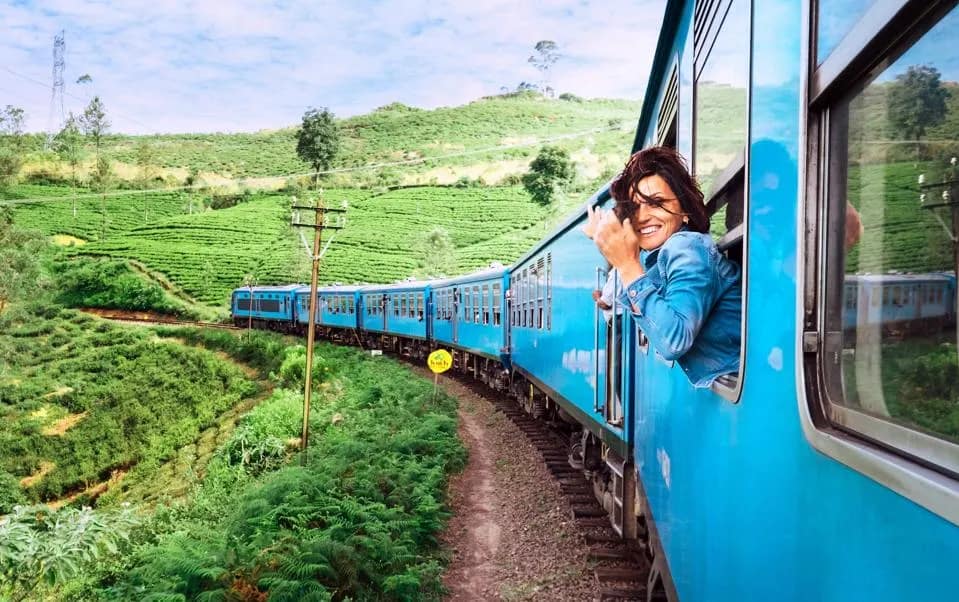
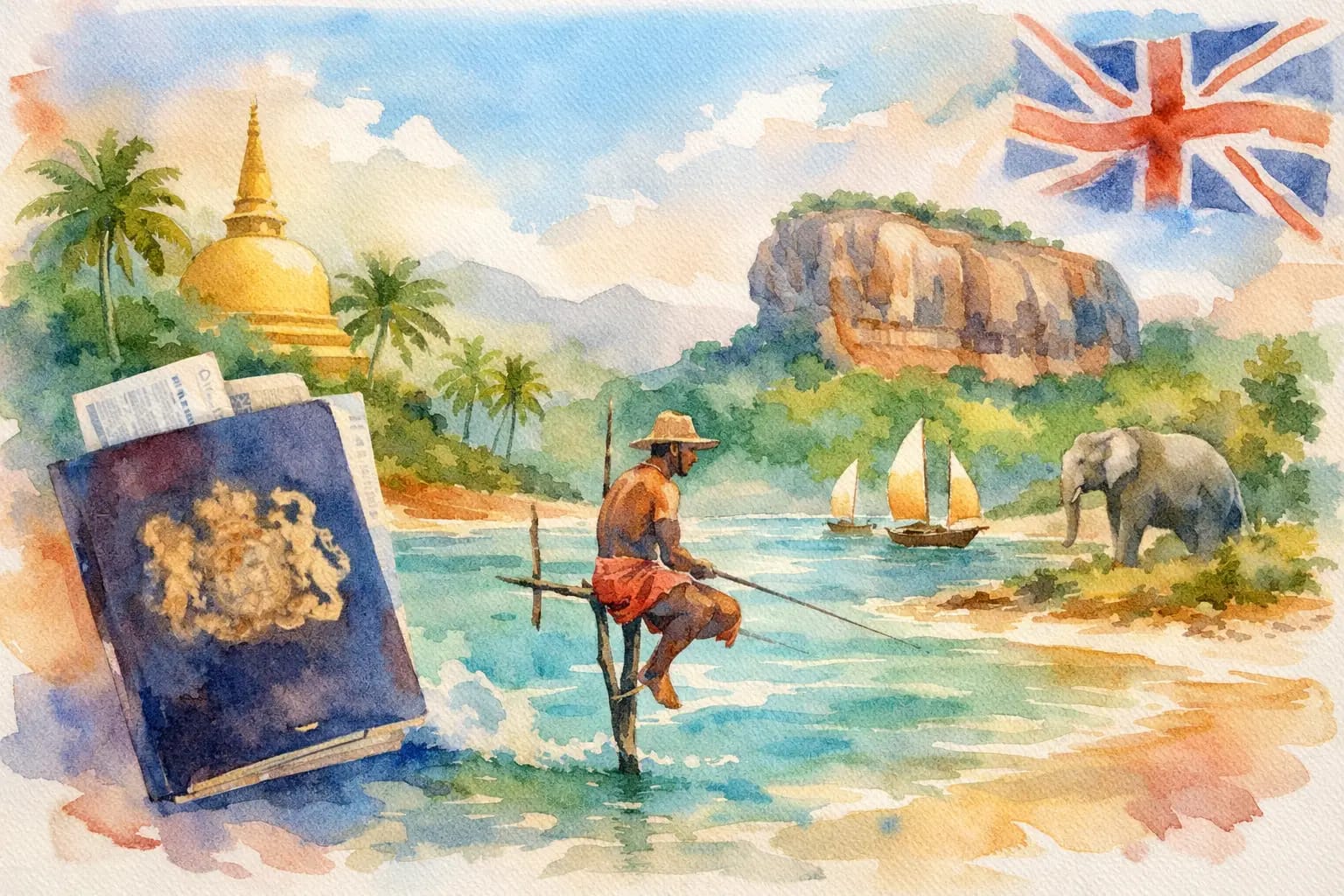
Sri Lanka rewards thoughtful planning. One day you may be watching elephants cross a sunlit track in Yala, the next sipping Ceylon tea in the hill country before arriving at a quiet Indian Ocean beach. This Sri Lanka visa guide UK is designed to make the formalities feel equally well cared for, so you can focus on the holiday ahead rather than paperwork at the airport.
For most British passport holders visiting for tourism, the key requirement is usually a Sri Lankan Electronic Travel Authorisation, known as an ETA. Entry rules, fees and online application arrangements can change, sometimes with little notice, so always check the official Sri Lankan immigration and ETA channels shortly before applying and again before departure.
Sri Lanka visa guide UK: the essentials
A Tourist ETA is generally the appropriate permission for a holiday, whether you are planning a classic cultural tour, a family escape combining safari and coast, or a honeymoon that continues to the Maldives. It is normally arranged online before travel rather than purchased as an afterthought at the airport.
The standard tourist permission has commonly allowed a stay of up to 30 days from arrival and may allow two entries during its validity period. That can be useful for a carefully designed itinerary with a short onward stay elsewhere in the region, followed by a return to Sri Lanka. However, do not assume that an earlier trip’s conditions, a friend’s experience or an old booking confirmation reflects the rules for your own travel date.
Your application should match the passport you will use to travel. Check every detail before submitting it, particularly your full name, passport number, date of birth and nationality. A small typing error can create an unnecessary conversation at check-in, when the only thing you should be thinking about is settling into your journey.
Passport validity and supporting travel details
Your passport should generally have at least six months’ validity from the date you arrive in Sri Lanka, as well as sufficient blank pages for any entry stamps. If your passport is close to expiry, renewing it before applying for an ETA is often the cleaner choice. An ETA tied to an old passport will not remove the need to travel with the correct valid document.
Airlines and border officials may also ask to see evidence of onward or return travel, together with details of where you will stay for the first part of your visit. For a multi-stop itinerary, keep a clear copy of your overall plan: arrival date, key hotels, internal transfers and departure flight. You may never need to show it, but having it readily available makes arrival more relaxed.
Visitors should also be able to demonstrate that they can support themselves during their stay. For most guests on a fully planned holiday, confirmed accommodation and travel arrangements provide sensible supporting context. It is still wise to carry a payment card and access to funds in the usual way.
Applying for your Sri Lanka tourist ETA
Apply through the official Sri Lankan government route rather than a third-party website that adds avoidable service charges. The application process is usually straightforward and is best completed before you finalise any non-refundable travel element, if your timings allow.
You will typically need your passport details, contact information, intended arrival date and a card to pay the relevant fee. Use an email address you can access while travelling and save the approval notice both on your phone and offline. Although the immigration system may be able to retrieve your authorisation electronically, a printed copy is a reassuring backup, particularly after a long-haul flight.
Allow more time than you think you need. Online approvals can be prompt, but applications occasionally require further attention, and public holidays or technical changes can slow things down. Applying well ahead offers peace of mind, though not so far in advance that the ETA expires before your planned arrival. The correct timing depends on the validity stated in your approval and the flexibility of your departure dates.
Avoid making assumptions about visas on arrival. Policies concerning arrival applications can vary and may not suit every nationality or travel purpose. For a refined, unhurried arrival into Colombo, an approved ETA before you leave the UK is usually the sensible route.
Children, families and travelling together
Every traveller needs their own appropriate travel permission, including children travelling on their own passport. When organising a family holiday, make the visa check part of the same planning moment as confirming passports, travel insurance and flight names. This is especially valuable where one parent is travelling alone with children or where surnames differ.
Keep copies of birth certificates or parental consent documents if your family circumstances make them relevant. They are not a substitute for an ETA, but they can help resolve questions about a child’s travel arrangements. Requirements can differ according to the route and airline, so check these directly before departure.
If you want to stay longer than 30 days
Thirty days is enough for many beautifully balanced Sri Lanka holidays. It allows time for the Cultural Triangle, Kandy and the tea country, a wildlife lodge, Galle Fort and a few deeply restful beach days without rushing from one experience to the next. Yet some guests decide that the island deserves longer.
If you expect to stay beyond the period granted on arrival, investigate an extension before your authorised stay ends. Extensions are normally handled through Sri Lanka’s Department of Immigration and Emigration, and eligibility, duration and fees can change. Do not overstay while waiting to decide. Overstaying can lead to fines, delays or complications with future travel, none of which belongs in a holiday story.
A longer stay also calls for a more considered itinerary. Monsoon patterns vary between coasts, and a journey of four to six weeks can be shaped around the best weather in different regions. It is an opportunity to slow down rather than simply add more hotels: a few extra nights at a tea estate, a wellness retreat near the south coast, or time to explore lesser-known national parks can transform the pace of the trip.
Arrival in Sri Lanka: a calm final check
Before leaving for the airport, place your passport, ETA approval, return or onward flight details, first-night accommodation confirmation and travel insurance documents together. Download copies to your phone and carry paper versions of the essentials. Airport Wi-Fi is not the moment to search an inbox for a reference number.
Sri Lanka may also require an arrival or embarkation card, with the process and timing occasionally updated. Complete any required form through the official channels and answer questions accurately. Be especially clear about the purpose of your visit: tourism is not the same as business, employment, volunteering, journalism or paid work, each of which may need a different visa or advance permission.
Travellers arriving via Colombo should also allow for the reality of a long-haul arrival. It can take time to disembark, pass immigration, collect bags and meet your driver. A pre-arranged private transfer removes the uncertainty of negotiating transport after an overnight flight and gives the first hours of your holiday the calm, polished feel they deserve.
Questions UK travellers often ask
Do British citizens need a visa for Sri Lanka?
British citizens travelling for a holiday will usually need a Tourist ETA or other appropriate advance travel authorisation. The precise rules depend on nationality, passport type, purpose of visit and current Sri Lankan policy, so confirm the position using official sources before travel.
Is the ETA enough for a Sri Lanka and Maldives holiday?
It covers only your entry to Sri Lanka under its stated conditions. The Maldives has its own entry requirements, and a return to Sri Lanka may require an ETA that permits another entry or a fresh authorisation. This is one reason multi-stop journeys benefit from being planned as one connected itinerary rather than two separate bookings.
What happens if my passport changes after approval?
If you renew or replace the passport used for your ETA application, check whether you must apply again. Travel permissions are commonly linked to a specific passport number, and carrying both documents does not always resolve the issue.
A little care with your ETA is the quiet beginning of an exceptional Sri Lankan escape. Once it is in place, you are free to look forward to the more memorable details: the scent of cinnamon in a coastal kitchen, the view from your suite at dawn, and a journey designed around exactly how you want to feel when you return home.