


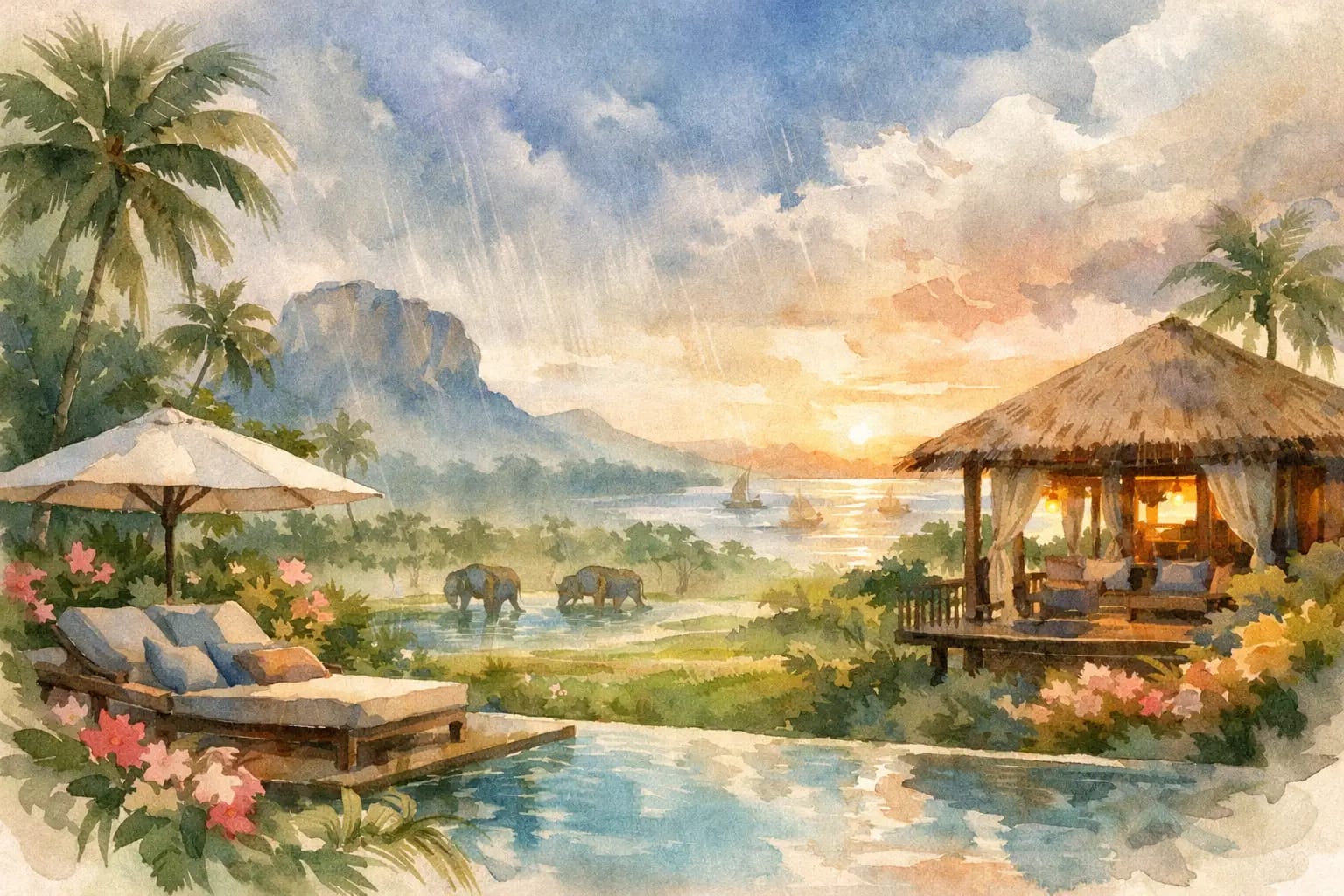
A tropical downpour can turn the Tea Country a deeper green, clear the air over a jungle-fringed lake and make an afternoon at a heritage hotel feel even more indulgent. This Sri Lanka monsoon travel guide is not about avoiding rain altogether. It is about choosing the island’s right coast, experiences and pace for the month you wish to travel.
Sri Lanka is wonderfully compact, yet its weather patterns are remarkably varied. While rain falls on one side of the island, another can be enjoying bright beach days and calm seas. With a considered itinerary, the monsoon season can offer a more private, atmospheric and excellent-value way to experience this extraordinary destination.
Understanding Sri Lanka’s two monsoons
Sri Lanka has two principal monsoon systems, often known as Yala and Maha. Their names matter less than their effect on the regions you plan to visit.
The south-west monsoon, generally from May to September, brings more rain and rougher seas to the west coast, south coast and much of the central highlands. This is when the east coast comes into its own. Trincomalee, Pasikuda and Arugam Bay usually enjoy their sunniest, driest spell, with long beach days and favourable conditions for swimming, snorkelling and water sports.
The north-east monsoon, usually from October to January, brings wetter conditions to the east and north. At this time, the south and west coasts are often the more rewarding choice, particularly from December onwards. Think golden mornings in Galle, relaxed beach time around Bentota or Tangalle, and excellent whale-watching opportunities off the southern coast in season.
There are transition months too. October and November can bring rain across much of the island, often in dramatic afternoon or evening bursts. February to April is typically one of the most reliable periods for a wider island journey, although Sri Lanka’s tropical climate always retains an element of surprise. Weather is never an exact science, and local conditions can vary from one valley to the next.
Sri Lanka monsoon travel guide: where to go each season
The best monsoon itinerary is led by geography rather than a fixed idea of a beach holiday. A thoughtfully designed route can still combine culture, wildlife, wellness and time by the sea, but the balance should shift with the season.
May to September: turn east for sunshine
For summer holidays from the UK, the east coast is the natural choice. Pasikuda is particularly appealing for couples and families who want calm, shallow water and a polished resort setting. Its crescent-shaped bay is known for gentle swimming conditions, while the surrounding coast lends itself to unhurried days on the sand.
Further north, Trincomalee pairs beach relaxation with a stronger sense of place. Its natural harbour, historic temples and nearby Pigeon Island make it a lovely fit for travellers who want more than a sun lounger. Private boat trips, snorkelling excursions and sunset dining can all be arranged around the best daily conditions.
This period is also ideal for combining the east coast with Sri Lanka’s Cultural Triangle. Sigiriya, Dambulla, Polonnaruwa and Anuradhapura can be visited in the morning, before returning to a restful hotel for the heat of the afternoon. The famous elephant gathering in the Minneriya area is often at its most impressive from around July to September, though nature follows its own timetable and sightings can never be guaranteed.
The south-west may be wetter during these months, but it should not automatically be ruled out. A night or two in Galle Fort, a tea estate stay, or a spa-focused retreat can be deeply rewarding when planned with realistic expectations. You may trade uninterrupted sun for cooler air, fewer visitors and the pleasures of a beautifully appointed hotel during a passing shower.
October to January: embrace culture and the south-west
Autumn can be the most changeable time to travel, especially in October and November. It suits travellers who value culture, cuisine, wellness and a flexible pace as much as perfect beach weather. A skilled private guide and driver are particularly valuable here, allowing day plans to adjust around local forecasts and road conditions.
From December, the south and west usually become increasingly attractive. The historic lanes of Galle Fort, the palm-lined beaches near Tangalle and the serene lagoons of the west coast offer a graceful setting for a festive escape. Whale watching from Mirissa generally operates during the south coast season, often between November and April, subject to sea conditions and responsible wildlife practices.
The east and north are more likely to be affected by the north-east monsoon at this time. If those regions are central to your plans, it is worth allowing additional flexibility and selecting hotels that offer comfort, excellent dining and memorable on-property experiences when rain arrives.
February to April: the most versatile window
For a first, multi-stop Sri Lanka holiday, February through April is often the easiest period to work with. The south and west coasts tend to be sunny, the Cultural Triangle is accessible, and the hills are refreshingly cooler than the lowlands. It is an especially lovely season for honeymoons that combine a boutique beach retreat with colonial heritage, tea country scenery and a private safari.
This is also a popular period, so the most distinctive suites, intimate villas and preferred guides are best secured well ahead. Luxury travel is not simply about selecting the finest hotel. It is about ensuring the timing, room category, transfers and experiences all work beautifully together.
What monsoon rain really changes
A monsoon holiday is not necessarily a wet holiday. Rain often arrives in concentrated bursts, with bright intervals before and afterwards. What it changes most is the rhythm of the day. Early starts become more valuable, leisurely lunches feel well earned, and afternoons are perfect for a spa treatment, cooking class, tea tasting or time beside your private pool.
The more significant consideration is the sea. Strong currents and higher waves can make some south-western beaches unsuitable for swimming during the May to September monsoon, even when the sky looks clear. Your hotel team will advise on daily conditions, and a good itinerary should favour beaches with the best seasonal swimming prospects rather than relying on photographs alone.
Road journeys can also take longer in heavy rain, particularly in hill country. This is why private transport, carefully spaced overnight stays and a driver-guide who knows the routes are worth prioritising. Trying to fit Sigiriya, Kandy, Ella and the coast into a few rushed days is rarely enjoyable in any season, and even less so when the weather is changeable.
Choosing experiences that feel better in the rain
Some of Sri Lanka’s most memorable experiences gain atmosphere from the monsoon. Tea plantations shimmer after rainfall, ancient stone temples are quieter in softer light, and Ayurveda rituals become an especially restorative part of a wellness retreat. A private guided walk through Galle Fort can be timed for the cooler morning, followed by a long lunch overlooking the ramparts.
Wildlife remains a compelling reason to travel, but it requires flexibility. Different national parks shine at different times of year, and park closures, rainfall and animal movement affect what is possible. Yala, Wilpattu, Minneriya and Gal Oya each offer a distinct safari character. Rather than promising a particular sighting, a carefully planned journey selects the park with the strongest seasonal potential and allows enough time to enjoy the experience without pressure.
For honeymooners, a monsoon itinerary can feel especially intimate. Fewer guests at boutique properties, moody skies over the ocean and a slower daily rhythm create space for the moments that are too often lost on a tightly scheduled holiday. Families may prefer the east coast in summer, where gentler seas make beach time easier and cultural excursions can be tailored to younger travellers’ energy levels.
How to pack and plan with confidence
Bring lightweight, breathable clothing, a light waterproof layer and shoes with grip for temple steps and countryside walks. Sun protection remains essential even on overcast days, while a small dry bag is useful for cameras and phones during boat trips or sudden showers. Smart-casual resort wear is appropriate for most luxury hotels, with modest clothing needed for temple visits.
The key is not to build every day around outdoor activity. Allow room for a longer breakfast, a spa appointment or simply an afternoon in a suite chosen for its view. Ask your travel designer to include sensible transfer times, seasonal beach recommendations and alternative experiences for days when rain is heavier than expected.
At Lush Sri Lankan Holidays, this is where personalised planning matters most: matching the right region to your dates, then shaping each stay around the style of holiday you want. The monsoon does not diminish Sri Lanka’s magic. Treated with respect and planned around intelligently, it can reveal a quieter, greener and beautifully personal side of the island.