


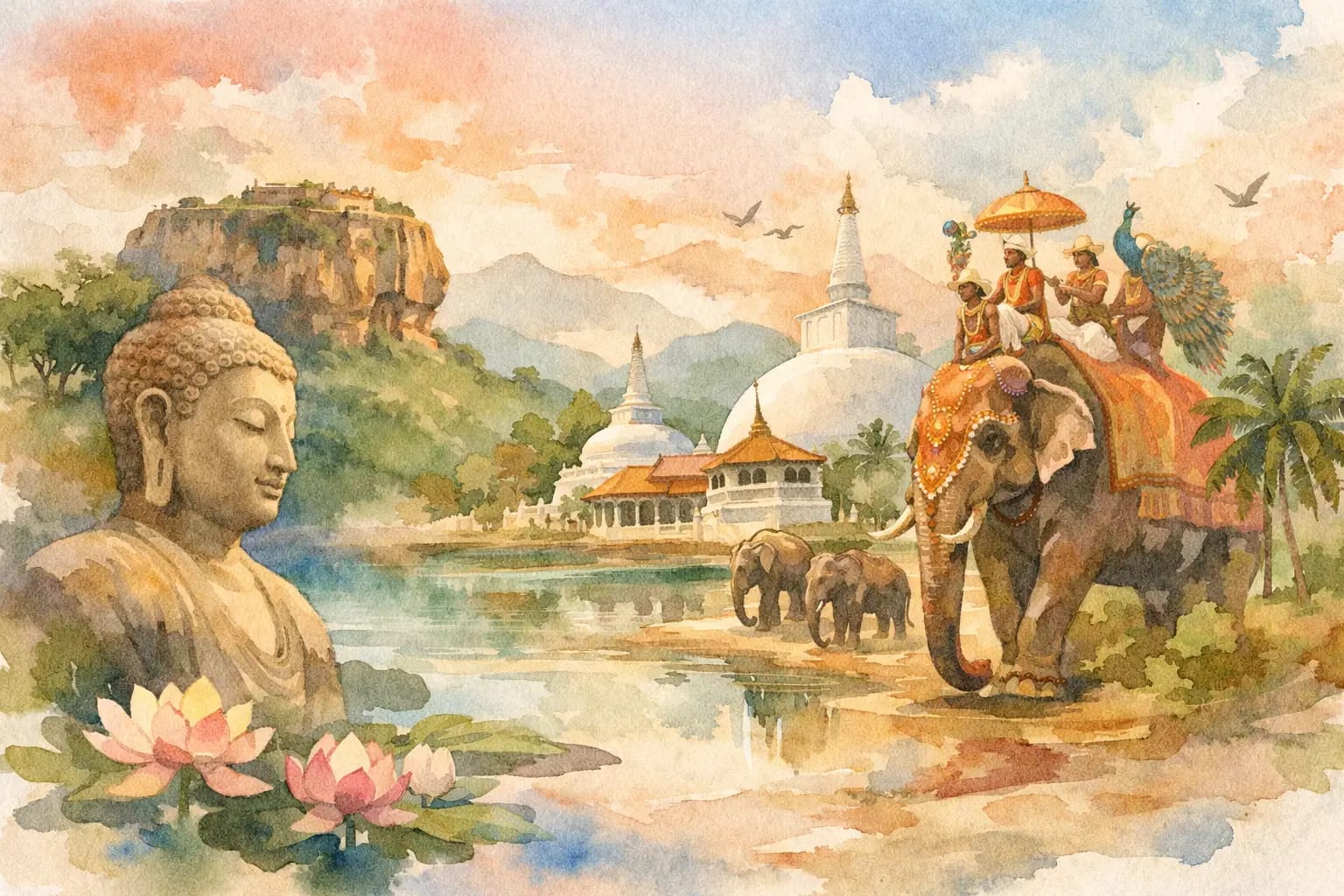
The moment you stand beneath the rock walls of Sigiriya at first light, or hear temple drums roll through Kandy at dusk, Sri Lanka stops feeling like a simple beach holiday and starts to reveal its deeper rhythm. A thoughtful Sri Lanka cultural tour guide is not just about listing famous sites. It is about understanding how to move through the island in a way that feels graceful, comfortable and genuinely connected.
For travellers who want more than a rushed circuit of landmarks, culture in Sri Lanka is best experienced as a series of layered encounters. Ancient capitals, sacred temples, colonial architecture, traditional arts and richly regional food all sit within surprisingly short travelling distances. That closeness is part of the island’s appeal, but it also means pacing matters. A well-crafted journey can feel immersive and restorative. A poorly planned one can feel like too much road time and not enough meaning.
How to use this Sri Lanka cultural tour guide
The cultural heart of Sri Lanka is often called the Cultural Triangle, anchored by Anuradhapura, Polonnaruwa, Sigiriya and Dambulla, with Kandy adding a final spiritual and historical note in the hills. Most first-time visitors begin here, and with good reason. These sites hold some of South Asia’s most remarkable Buddhist heritage, royal history and archaeological treasures.
That said, the best cultural itineraries do not treat these places as boxes to tick. They allow for atmosphere. You might arrive at a temple early, before the heat builds and the larger coaches appear. You might pair a morning at an ancient city with an unhurried lunch and a quiet afternoon at a beautifully designed lodge. Luxury, in this context, is not excess. It is space, ease and the freedom to absorb what you are seeing.
The essential cultural stops
Sigiriya and Dambulla
Sigiriya is often the image that first draws travellers to Sri Lanka. Rising dramatically from the plains, the rock fortress is visually extraordinary, but it is also historically complex. Part royal citadel, part pleasure palace, part defensive stronghold, it speaks to ambition on a grand scale. Climbing it is worthwhile for most visitors, though it is not ideal for everyone. The stairways are manageable for many reasonably fit travellers, but the heat and exposure can make the ascent demanding. If you prefer a gentler experience, the surrounding views and nearby landscapes still reward your time.
Dambulla, by contrast, offers a more contemplative mood. Its cave temple complex houses murals and Buddha statues within rock chambers that feel deeply atmospheric. It is one of the island’s most rewarding cultural visits because it combines artistic richness with active worship. Dress respectfully, move quietly and allow time rather than rushing through.
Anuradhapura and Polonnaruwa
These two ancient capitals are often compared, but they offer different experiences. Anuradhapura feels more expansive and sacred, with living pilgrimage traditions woven through monumental ruins, dagobas and ancient trees. It can feel spiritually resonant in a way that extends beyond archaeology.
Polonnaruwa is more compact and often easier to navigate, with beautifully preserved structures and a clearer sense of royal urban planning. If your time is limited, some travellers find Polonnaruwa more accessible. If you want a stronger sense of continuity between past and present, Anuradhapura may leave the deeper impression. Ideally, a refined itinerary includes both, balanced with enough downtime to prevent heritage fatigue.
Kandy
Kandy marks a shift in tone. Set around a lake and wrapped by hills, it feels more intimate than the dry-zone ancient cities. The Temple of the Sacred Tooth Relic remains one of the most important Buddhist sites in the country, and the city’s cultural identity is shaped by ritual, music, dance and ceremony. Timing can make a significant difference here. Evening puja offers energy and devotion that daytime visits can lack.
Kandy is also a useful transition point between the Cultural Triangle and the tea country. For many travellers, this is where a culture-led journey begins to soften into a slower, more scenic phase.
What many guides miss about cultural travel in Sri Lanka
A strong Sri Lanka cultural tour guide should mention that heritage is not confined to ancient stones. Some of the most memorable cultural moments happen away from headline sites. A private cooking experience in a village home, a visit to a traditional craft workshop, a conversation with a resident guide who can explain Buddhist iconography properly, or a Kandyan dance performance presented in the right setting can add texture that major monuments alone cannot provide.
There are trade-offs, of course. Not every cultural performance feels intimate, and not every so-called authentic village visit will suit travellers who value privacy and subtlety. This is where careful curation matters. The difference between a thoughtful cultural encounter and a staged one often comes down to timing, context and who has arranged it.
Planning the right pace
One of the biggest mistakes in Sri Lanka itinerary planning is underestimating travel times. Distances on the map may appear short, but road journeys can take longer than expected. If your holiday includes Colombo, the Cultural Triangle, Kandy, the hill country and the coast all within a week, the result may feel compressed.
For a culture-focused trip, ten to twelve nights usually allows a more elegant rhythm. This gives you time for three or four nights in the Cultural Triangle, two nights in Kandy or nearby, and then space to add tea country, wildlife or a beach stay without losing the trip’s coherence. Families may prefer fewer hotel changes. Honeymooners often appreciate a deeper stay in one or two exceptional properties rather than a constant circuit.
A private driver-guide transforms this experience. It means flexibility if the weather changes, if a site feels crowded, or if you simply want to linger over lunch. It also makes cultural visits richer, because interpretation is often what turns a beautiful ruin into a meaningful story.
When to go for a cultural itinerary
Sri Lanka’s weather is regionally varied, so there is rarely a single perfect month for the entire island. The Cultural Triangle and Kandy are often particularly enjoyable from December to April, when conditions are generally drier, though shoulder months can be rewarding with fewer crowds and greener landscapes.
If you are combining culture with the south or west coast, winter sun planning works well for many UK travellers. If your focus extends to the east coast too, the ideal timing may shift. This is why a one-size-fits-all itinerary rarely does the island justice. The best route depends on what you most want from the holiday.
Choosing stays that support the experience
Accommodation shapes cultural travel more than many people expect. A large anonymous hotel near a major site may be practical, but it rarely adds much to the journey. A smaller boutique property, by contrast, can create a sense of place – whether through architecture, service, cuisine or setting.
Near the Cultural Triangle, many discerning travellers prefer secluded lodges or elegant resorts that offer early access to sites, serene pools and polished service after a morning of sightseeing. In Kandy, heritage-style properties or refined hillside retreats can lend the city’s spiritual and colonial layers a little more atmosphere. Comfort matters, especially in a destination where warm days, temple visits and road journeys are all part of the experience.
This is where expert trip design becomes especially valuable. Lush Sri Lankan Holidays, for example, curates cultural routes with handpicked hotels and private travel arrangements so the journey feels effortless rather than over-planned.
What to wear and how to visit respectfully
Sri Lanka is warmly welcoming, but cultural etiquette matters. Temples generally require shoulders and knees to be covered, and shoes must be removed before entering sacred areas. Light, breathable fabrics work best, especially if you are visiting multiple sites in one day.
You will also want to carry socks for hot stone surfaces, a hat for outdoor ruins and a shawl or scarf for temple visits. Photography is usually allowed in many places, but not everywhere, and posing with your back to Buddha statues is considered disrespectful. A good guide will quietly steer you through these details so everything feels easy and respectful.
Beyond the classics
If you have visited Sri Lanka before, or simply prefer a more layered trip, there are excellent cultural additions beyond the standard route. Galle offers Dutch colonial architecture and a very different historical lens from the Buddhist kingdoms inland. Jaffna opens up Tamil heritage, Hindu temples and cuisine that feels distinct from the south. Even Colombo, often treated as an arrival point, rewards a closer look through its architecture, galleries and dining scene.
These additions work best when they are integrated with purpose. Not every traveller needs the full sweep of the island. Sometimes a tighter journey, beautifully paced, leaves the more lasting impression.
The most rewarding cultural holidays in Sri Lanka are not the ones that try to see everything. They are the ones that leave room for stillness between the highlights – a quiet cup of Ceylon tea after a temple visit, a sunset from a hillside terrace, the comfort of returning to a beautifully prepared room after a day full of history. Plan for that feeling, and the island will give you far more than photographs.