


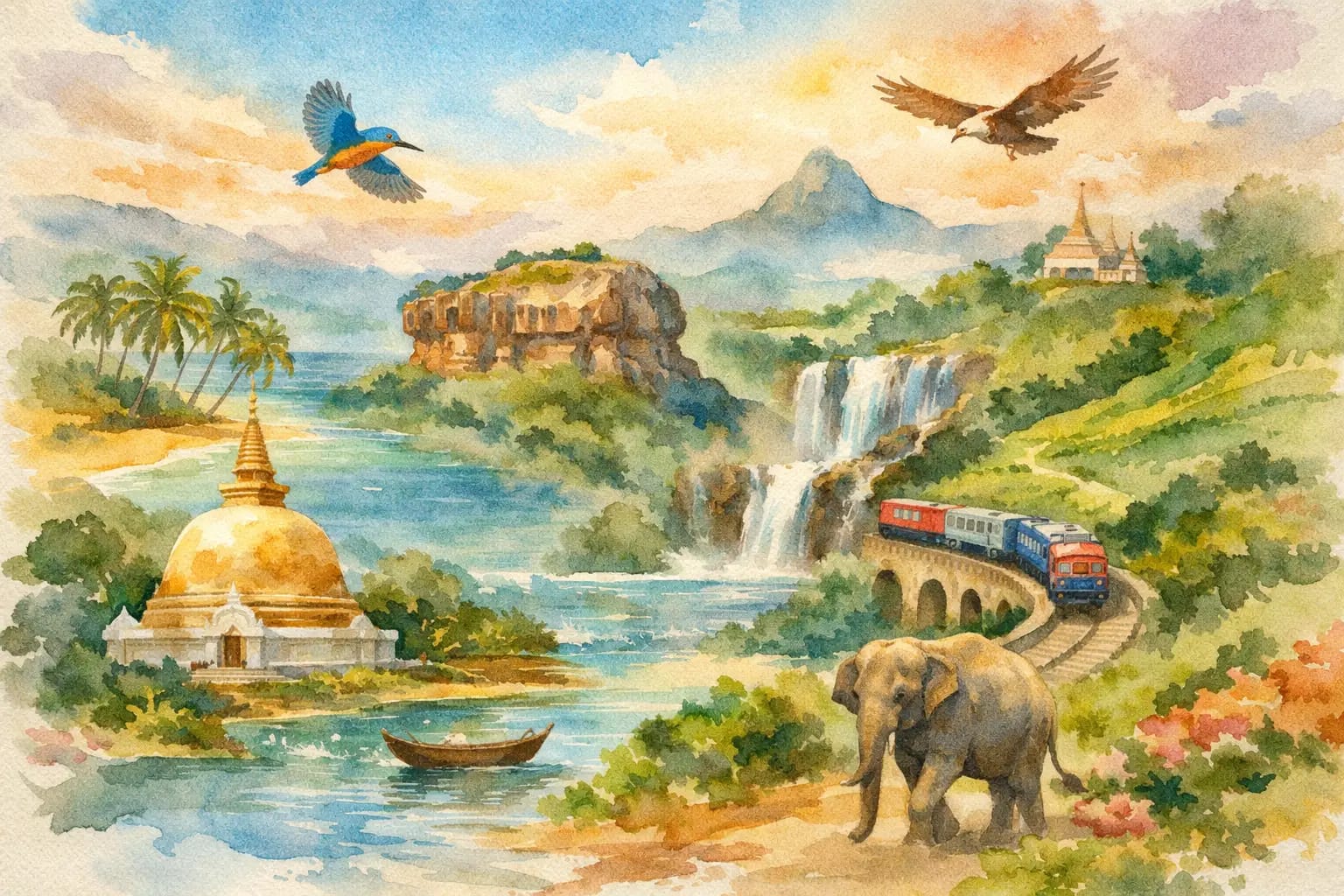
A well-planned multi-stop Sri Lanka tour can take you from a candlelit beach supper on the south coast to misty tea trails in the hills, then on to ancient temples, leopard country and a final few nights beside the Indian Ocean. That variety is exactly what makes Sri Lanka so compelling – and exactly what makes planning it properly worth the effort.
For travellers who want more than a single resort stay, Sri Lanka rewards movement. Distances are manageable, yet each region feels distinct. Within one holiday, you can experience colonial-era hill stations, sacred cities, palm-fringed beaches, safari landscapes and deeply restorative wellness retreats. The art lies in combining them with pace, comfort and enough breathing space to enjoy each stop.
Why a multi-stop Sri Lanka tour works so well
Few destinations suit a multi-centre holiday quite like Sri Lanka. The island is compact, but the contrasts are striking. In the space of a week and a half, you might watch the sunrise over Sigiriya, sip Ceylon tea in Hatton, spot elephants in Yala and end with a barefoot stay in Tangalle or Bentota.
That said, more stops do not automatically mean a better trip. A rushed itinerary can leave even the loveliest properties feeling like brief check-ins between long drives. The most successful journeys are designed around rhythm. A couple of nights immersed in culture may be followed by slower beach time. A wildlife stop often works best before or after a restorative retreat in the hills. Luxury, in this context, is not only about where you stay. It is also about how effortlessly the journey unfolds.
Choosing the right shape for your holiday
The first decision is not which hotel to book, but what sort of holiday you want the trip to feel like. Some guests want Sri Lanka’s headline experiences neatly woven into ten or twelve nights. Others prefer a more spacious two-week itinerary with fewer hotel changes and more time to settle into each setting.
For first-time visitors, a classic route often includes the Cultural Triangle, Kandy or the tea country, one safari destination and the coast. This gives you a rounded sense of the island without trying to see every corner. Couples on a honeymoon may lean towards scenic train journeys, intimate boutique stays and a longer beach finale. Families often prefer private transfers, villas or interconnecting suites, and a gentler pace with child-friendly wildlife and pool time built in.
There is also the question of seasonality. Sri Lanka can be visited year-round, but the best route depends on the month. The south and west coasts are typically strongest during the northern winter, while the east coast shines in the British summer months. This matters because the ideal multi stop Sri Lanka tour in February is not necessarily the same one you would plan in July.
How many stops is too many?
For most travellers, three to five stops is the sweet spot. Fewer than that, and you may miss the richness that makes Sri Lanka special. More than that, and the holiday can start to feel overly structured. If you have ten nights, three carefully chosen bases usually work better than six one-night stays.
One-night stops are sometimes justified for a particular experience, but they should be used sparingly. In a destination where many of the finest hotels are part of the pleasure, arriving late and leaving early can dilute the experience. Two or three nights in each region allows time for both curated sightseeing and moments of quiet ease.
The regions worth combining
Sri Lanka’s most rewarding itineraries balance cultural depth, scenic contrast and rest. The Cultural Triangle is often the natural starting point, with Sigiriya, Dambulla and Polonnaruwa offering history, drama and excellent access to ancient sites. This region pairs beautifully with boutique stays surrounded by forest or lakeside views.
From there, Kandy provides a softer urban interlude, with temple visits, gardens and a glimpse into Sri Lanka’s spiritual heart. Some travellers stay briefly before moving into the hill country, where tea estates, cooler air and panoramic landscapes shift the mood entirely. This is where a journey slows down in the most elegant way.
For wildlife, Yala is the best-known choice, especially for leopard safaris, though Wilpattu and Udawalawe can be better suited depending on your route and interests. Yala has strong appeal, but it can feel busy in peak periods. A more tailored discussion around priorities – leopard sightings, birdlife, elephant encounters, exclusivity, travel time – makes a marked difference.
Beach time is where the itinerary exhales. The south coast offers stylish hideaways, surf beaches, sea-view suites and easy access to Galle. The west coast can work well for shorter transfers, while the east coast is ideal in the right season for a more laid-back, less developed shoreline. For some guests, adding the Maldives after Sri Lanka creates an especially polished twin-centre finish.
What makes a luxury itinerary feel genuinely effortless
A high-end multi-centre holiday is not defined by thread count alone. It is defined by the invisible details being handled well. Airport meet-and-greet, well-paced private transfers, drivers who know when to offer insight and when to leave you in peace, and hotels selected for character as much as comfort – these are the things that shape the experience.
The quality of sequencing matters too. A long-haul arrival is rarely the right moment for an intensive cultural schedule. Equally, a safari can be thrilling, but it often involves early starts and dusty game drives, so placing it before a restorative beach or spa stay makes practical sense. Good itinerary design protects your energy as much as your time.
This is also where bespoke planning earns its place. Two travellers may both want culture, wildlife and coast, but one might prioritise architecture and Ayurveda, while the other wants train travel and exceptional dining. The best journeys are not generic loops around a map. They are shaped around what you will remember most.
Sample pacing for a multi-stop Sri Lanka tour
A 10-night itinerary might begin with two nights in the Cultural Triangle, continue with two in Kandy or tea country, then move to two nights on safari and finish with four on the coast. That structure feels varied but manageable.
With 12 to 14 nights, there is more room to linger. You can allow three nights in the hills, perhaps include Galle alongside a beach stay, or choose a more exclusive wildlife lodge with time for multiple game drives. The extra days transform the tone of the trip from energetic to unhurried.
If you are celebrating a honeymoon, anniversary or milestone birthday, it is often worth reducing the number of stops and upgrading the significance of each one. A superb suite with a private plunge pool, a tea bungalow with deeply personal service or a secluded beachfront villa can be more memorable than squeezing in another destination simply to say you have seen it.
Practical decisions that shape the whole experience
Transport is one of the biggest factors in how your holiday feels. Private car and driver remains the most comfortable way to move between regions, particularly if you value flexibility and door-to-door ease. Scenic rail journeys in the hill country are wonderfully atmospheric, but they work best when integrated thoughtfully rather than treated as the default for every transfer.
Luggage planning matters more than many people expect. Moving across several climates means packing for warm coastal days, cooler evenings in the hills and early-morning safaris. A considered itinerary helps reduce the sense of living out of a suitcase.
Hotel selection also deserves more attention than star ratings alone. Some travellers will prefer heritage charm, others contemporary coastal design, and others still a family villa with generous space. In Sri Lanka, the right property can root you in a place in a way a standard luxury hotel never quite does. This is why boutique curation is so valuable.
For those seeking a polished, fully supported journey, Lush Sri Lankan Holidays takes a concierge-style approach that removes the friction from complex itinerary planning while keeping the experience personal.
When tailor-made is better than off-the-shelf
Structured tours can be an excellent starting point, especially if you want reassurance around route, timings and standout experiences. They work particularly well for first-time visitors who want a clear framework. But tailor-made planning tends to become more valuable the moment your priorities become more specific.
Perhaps you want wellness woven into the trip without losing cultural highlights. Perhaps you need family-friendly logistics but do not want the holiday to feel childish. Perhaps you have been to Sri Lanka before and want to focus on the east coast, tea trails and quieter wildlife reserves. These are the points at which personal itinerary design elevates the entire journey.
The finest multi-stop holidays feel beautifully composed, not overly arranged. They give you access to Sri Lanka’s richness without making you work for every detail. When the route is right, the hotels are chosen with care and the pacing respects how you actually want to travel, the island reveals itself with rare generosity.
If you are planning a multi-stop Sri Lanka tour, the most useful place to begin is not with a checklist of sights, but with the feeling you want to carry home.