


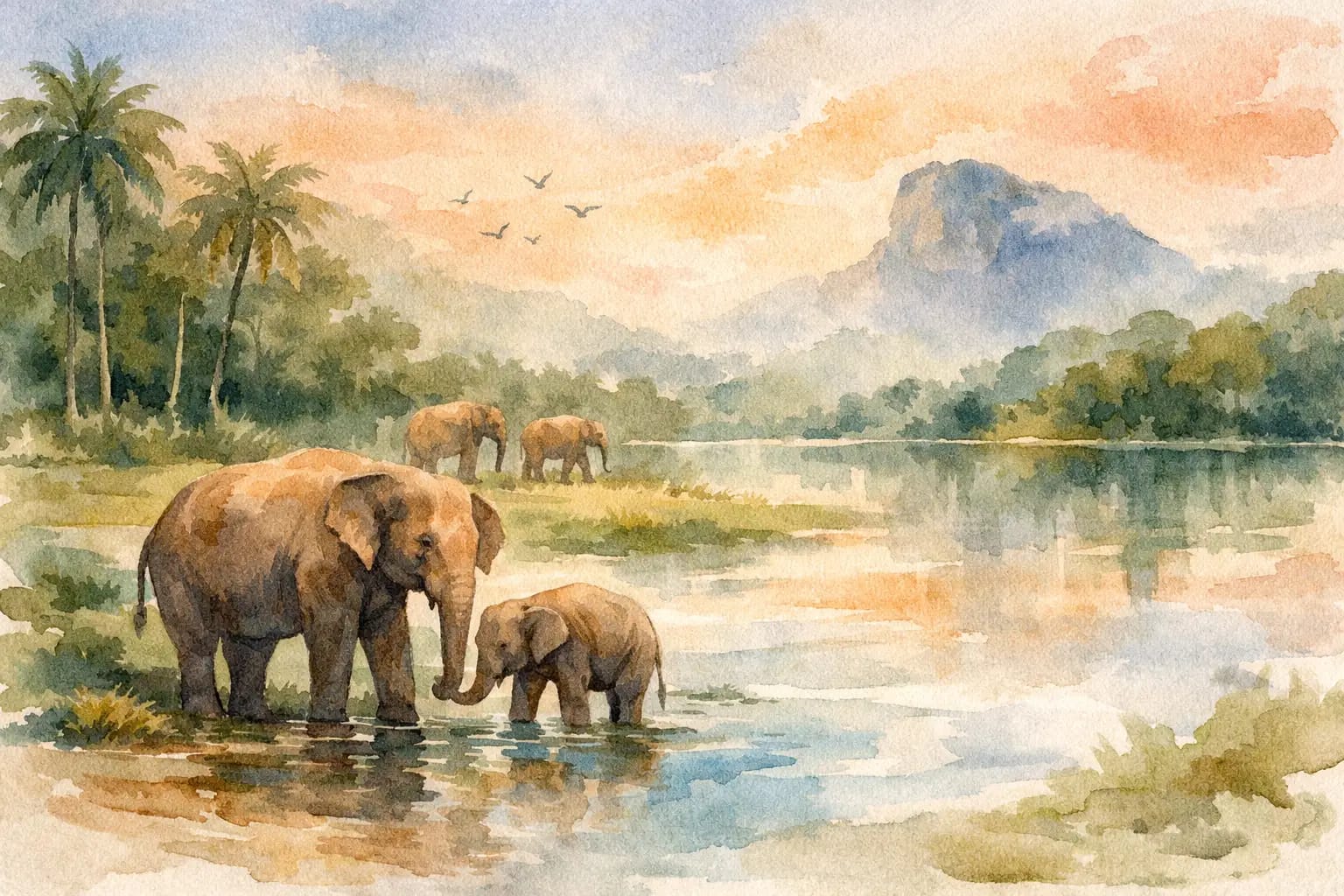
A close elephant encounter can be one of the most moving moments of a Sri Lanka holiday. Yet when travellers search for ethical elephant experiences Sri Lanka offers, they quickly discover a more complicated picture – one that asks for care, discernment and a little local insight.
Sri Lanka is deeply connected to elephants. They appear in history, religion, wildlife conservation and village life, and seeing them in the wild can be extraordinary. But not every attraction marketed as a “sanctuary” or “orphanage” reflects the standards thoughtful travellers expect. If you want your journey to feel both memorable and responsible, the best choice is rarely the most staged one.
What ethical elephant experiences in Sri Lanka really look like
An ethical experience begins with a simple principle: the elephant’s welfare comes before the visitor’s entertainment. That sounds obvious, but in practice it rules out a surprising number of popular activities.
In most cases, ethical elephant encounters in Sri Lanka involve observation rather than interaction. You are watching elephants behave naturally, keeping a respectful distance and avoiding anything that encourages performance, close handling or dependence on tourists. If an experience revolves around touching, bathing, feeding on cue, posing for photographs or riding, it is usually designed around people first and elephants second.
This is where expectations matter. Some travellers imagine a meaningful animal experience must be intimate and hands-on. In reality, the most rewarding encounters are often quieter. Seeing a wild herd cross open grassland at dusk, watching calves stay close to their mothers, or listening to a guide explain migration routes can feel far more profound than any staged activity.
The best choice for most travellers: seeing elephants in the wild
For many guests, a safari is the most ethical and rewarding way to experience elephants in Sri Lanka. National parks and protected landscapes allow elephants to move in their natural habitat, socialise within their herds and follow their own rhythms.
Minneriya, Kaudulla and Udawalawe are among the best-known areas for elephant sightings. Minneriya is especially famous for “The Gathering”, a seasonal concentration of elephants around the reservoir, although wildlife is never guaranteed and conditions vary through the year. That unpredictability is part of what makes the experience real.
Udawalawe is often a favourite for travellers who want strong chances of seeing elephants in open terrain. It can be excellent, particularly with an experienced naturalist and a well-timed game drive. The quality of the sighting, however, depends not only on the park but on how the safari is run. Too many vehicles around a herd can quickly turn an elegant wildlife encounter into something intrusive.
A well-planned luxury itinerary makes a real difference here. Early departures, the right entrance points, knowledgeable guides and carefully chosen accommodation close to the parks all help create a more considered experience. Comfort and ethics are not competing priorities. In Sri Lanka, they often work best together when your journey is designed properly.
Elephant transit homes and rescue centres: worth visiting?
This is where nuance matters. Not every elephant facility is the same, and not every place with a strong conservation message offers a visitor experience that feels entirely comfortable.
Some centres exist primarily for rehabilitation, veterinary care or the managed raising of orphaned calves before release. In principle, that can be valuable work. The question is whether tourism supports the welfare mission or begins to shape it.
A responsible facility should have a clear conservation purpose, limited visitor interference and visible welfare standards. It should not depend on elephant performances, close-contact activities or constant crowd entertainment. If viewing is structured and distant, and if the animals are there for genuine rescue or rehabilitation rather than permanent display, a visit may be worthwhile.
Even then, it depends on what kind of experience you want. For many discerning travellers, a wild encounter still feels more aligned with the spirit of ethical travel. Rescue settings can be educational, but they are not interchangeable with seeing elephants live as elephants should.
Red flags to avoid when choosing elephant experiences
Marketing language can be polished, especially in travel. Words such as “ethical”, “rescue” and “sanctuary” are used generously, sometimes without much substance behind them.
A few warning signs are worth taking seriously. If elephants are offered for rides, the experience is not ethical. If tourists are encouraged to bathe with elephants, touch them freely or feed them for photographs, welfare is unlikely to be the main priority. If the venue promises guaranteed intimate interaction, that is usually another sign the animal’s natural boundaries have been removed for commercial reasons.
It is also wise to question heavily choreographed encounters. Elephants standing for repeated photo opportunities, responding on command for visitors, or remaining in unusually close proximity to crowds are not behaving naturally. Luxury travel should never mean privileged access at the expense of an animal’s well-being.
How to choose ethical elephant experiences Sri Lanka travellers can feel good about
The best approach is to ask better questions before you book. A reputable travel designer or operator should be able to explain why a particular experience is considered responsible, not simply assure you that it is.
Ask whether the elephants are wild or captive. Ask if there is any direct contact. Ask how visitor numbers are managed, how guides are briefed and what the conservation value actually is. If the answers are vague, overly promotional or centred on photo moments, that tells you a great deal.
For safari experiences, the standards of the guide and driver matter enormously. Sensitive wildlife viewing requires patience, not pressure. The vehicle should keep an appropriate distance, avoid blocking movement and never chase a sighting for the sake of spectacle. The calmest guides often create the most memorable mornings.
This is also where bespoke planning becomes valuable. Rather than squeezing an elephant stop into an already crowded route, it is far better to build it into the journey with intention. One or two nights in the right region, paired with a beautiful lodge and an expertly timed game drive, can transform the entire experience.
Ethical travel can still feel extraordinary
Some travellers worry that choosing the ethical route means sacrificing the emotional thrill of a close encounter. In practice, the opposite is often true.
There is something deeply affecting about meeting wildlife on honest terms. You are not being sold a performance. You are entering a landscape where something might happen, and if it does, it belongs to the place rather than to a script. That sense of authenticity lingers.
Sri Lanka is particularly special because elephant experiences can sit within a much broader and beautifully balanced journey. A few days of wildlife can be paired with tea country, heritage sites, coastal retreats or a restorative wellness stay. The result is a holiday that feels layered and personal, rather than built around a single attraction.
For honeymooners, families and couples celebrating a milestone, that balance matters. You may want adventure, but you also want elegance, comfort and a sense that every detail has been considered. Ethical wildlife experiences do not sit outside luxury travel. They are part of what defines modern luxury – thoughtful choices, deeper connection and the confidence that your holiday reflects your values as well as your tastes.
A more thoughtful way to remember Sri Lanka
Elephants are one of the island’s great privileges, but they are not there to complete a checklist. The finest encounters ask for patience, respect and a willingness to choose substance over spectacle.
If you approach Sri Lanka this way, you are likely to come home with something better than a staged photograph. You will remember the hush before sunrise in the park, the first movement in the grass, the guide lowering his voice, and the quiet thrill of seeing elephants exactly as they should be.