


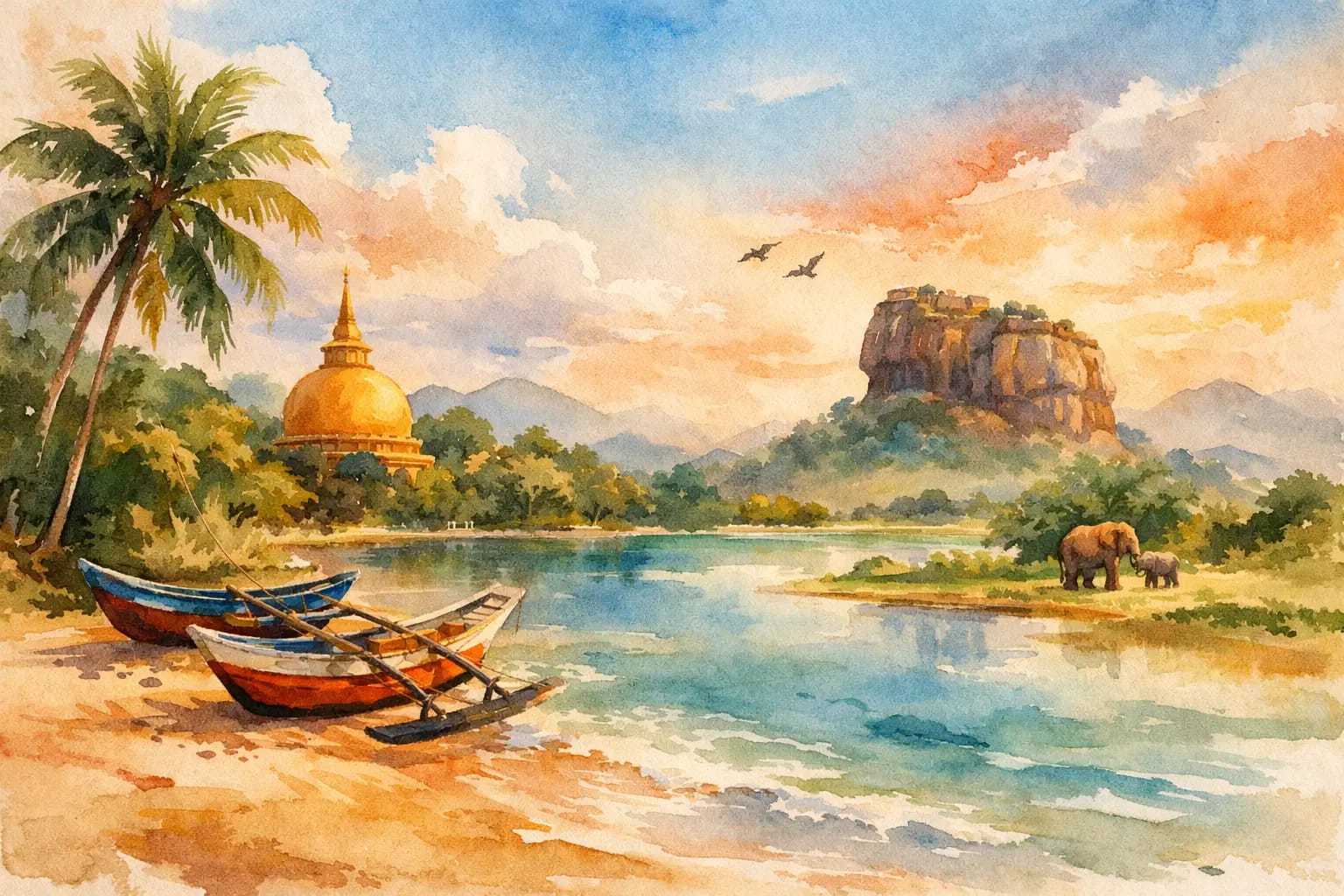
If Sri Lanka has been hovering on your shortlist, the question is usually not whether it is worth visiting, but whether it feels straightforward to go now. The reassuring answer is yes – tourists can visit Sri Lanka, and for many travellers it remains one of the most rewarding long-haul holidays in the Indian Ocean. The key is planning well, understanding current entry requirements, and shaping an itinerary around comfort, timing and the kind of experience you want.
For couples dreaming of tea country mornings and barefoot beach evenings, for families wanting wildlife without giving up good hotels, and for honeymooners looking for something more textured than a fly-and-flop escape, Sri Lanka continues to offer remarkable range in a relatively compact island. The difference between a smooth, memorable trip and a tiring one usually comes down to how well the journey is designed.
Can tourists visit Sri Lanka without difficulty?
In practical terms, yes. Sri Lanka is open to international leisure travellers, and the visitor experience is well established. Most visitors simply need a valid passport, the correct travel authorisation or visa arrangement, and sensible pre-trip checks before departure. Requirements can change, so it is always wise to verify the latest official entry rules close to travel, particularly around visas, passport validity and any arrival documentation.
What often worries travellers more than the formalities is whether the country feels comfortable on the ground. For most visitors staying in reputable hotels and travelling with a well-planned route, Sri Lanka feels accessible rather than difficult. The island has long welcomed international guests, and its best experiences – private game drives, heritage sites, boutique beach stays, scenic rail journeys and wellness retreats – are very much geared towards overseas travellers.
That said, Sri Lanka is not a destination where you want to improvise every transfer once you land. Road journeys can be longer than they appear on a map, standards vary between properties, and the most rewarding trips often combine several regions. A carefully paced itinerary matters.
Entry requirements and what travellers should check
Before booking, start with the essentials. Your passport should have sufficient validity, and you should check whether you need an Electronic Travel Authorisation or another form of tourist visa approval for your nationality. You should also review airline requirements, travel insurance terms and any health guidance relevant at the time of travel.
For British travellers, this part is usually straightforward, but it deserves attention. Small administrative issues can create unnecessary stress at the start of a holiday that ought to feel effortless. It is also worth checking with your accommodation or travel designer whether airport transfers, arrival assistance and internal transport are arranged in advance. Sri Lanka is a destination where that extra layer of planning can transform the experience.
Currency, local connectivity and transport logistics are also worth sorting before departure. While these are not barriers to entry, they shape how relaxed you feel once you arrive. If your priority is a refined, unhurried holiday, having these details handled ahead of time is far more valuable than it sounds.
Is Sri Lanka safe for tourists?
This is often the real question behind can tourists visit Sri Lanka. Most travellers are not just asking whether they are allowed to enter, but whether they will feel secure and looked after once they do.
Sri Lanka is, for the vast majority of leisure travellers, a very viable destination. As with any long-haul trip, safety is partly about judgement. Choosing trusted drivers, staying in quality accommodation, avoiding unnecessary late-night travel on unfamiliar roads, and keeping up with current government travel advice all make a difference.
There is also a distinction between safe and easy. Sri Lanka can absolutely be both, but not every style of travel delivers that. Backpacking with spontaneous overnight moves is a different experience from a private, chauffeur-guided journey with handpicked hotels. Travellers seeking comfort, privacy and reassurance tend to enjoy the island most when logistics are pre-arranged and the pace is realistic.
Families often find Sri Lanka particularly rewarding because it combines culture, wildlife and beach time without constant flights between regions. Couples and honeymooners appreciate that the island can feel intimate and varied at the same time. In one trip, you can move from temple cities to misty hills to palm-lined coastlines, with each stop feeling distinct.
When is the best time to visit Sri Lanka?
Sri Lanka is a year-round destination, but not in the simple, one-season-fits-all sense. The island’s weather patterns vary by coast and region, which is why timing should be matched to your route rather than treated as a blanket rule.
From roughly December to April, the south and west coasts tend to be at their best, along with popular Cultural Triangle touring. This is ideal for travellers wanting classic combinations such as Colombo, Sigiriya, Kandy, tea country and a southern beach stay. The seas are generally calmer on the west and south during this period, and the atmosphere feels particularly polished for a luxury holiday.
From around May to September, the east coast often comes into its own. If your priority is beautiful beaches with a quieter feel, areas such as Passikudah or Trincomalee can be especially appealing during the European summer. This seasonal variation is one of Sri Lanka’s strengths, but it does mean your itinerary should be shaped carefully. The best trip in February may not be the best trip in July.
Wildlife also affects timing. Leopard sightings in Yala, elephant gatherings in Minneriya and whale watching opportunities all have seasonal nuances. If these experiences are important to you, they should influence when and where you travel.
What kind of holiday does Sri Lanka suit best?
Sri Lanka rewards travellers who enjoy contrast. If you like one-dimensional resort holidays, there are easier destinations. If you want a journey that blends scenery, heritage, wildlife and rest, it is hard to think of many places that offer more in such a manageable footprint.
A first visit often works best as a curated circuit. You might begin with a night to recover after your flight, continue into the Cultural Triangle for ancient sites and private safari experiences, move into Kandy and the hill country for cooler air and tea estate elegance, then finish on the coast with a few days by the sea. That rhythm gives the island room to unfold properly.
Sri Lanka also works beautifully for multi-centre luxury travel. A beach extension in the Maldives, a wellness-led retreat, or a slower honeymoon route with standout boutique stays can all be woven in naturally. The point is not to see everything. It is to see the right places, in the right order, without spending the whole holiday in transit.
Why planning matters more here than in some destinations
Sri Lanka’s charm lies partly in its variety, but variety creates complexity. Distances can be deceptive, hotel quality is not uniform, and the difference between a lovely beach and an underwhelming one can be significant depending on the season.
That is why many discerning travellers choose to have the route designed for them. A well-crafted itinerary considers not just where to go, but how long to stay, which road transfers are sensible, where to splurge, and where a stop should be skipped altogether. This becomes especially important if you are travelling for a special occasion or simply do not want your holiday to feel like a logistical exercise.
For travellers used to premium long-haul holidays, Sri Lanka is often at its best when experienced through a concierge-style approach rather than piecemeal booking. The right hotel in tea country can feel utterly transportive. The wrong one can feel tired and remote. The right driver-guide can add warmth, cultural insight and ease. The wrong setup can make the trip feel far more tiring than it should.
So, can tourists visit Sri Lanka and enjoy it fully?
Yes – and for the right traveller, very much so. Sri Lanka is not only open to tourists, it remains one of the most compelling destinations for those who want more than a single-resort escape. It offers history without stiffness, wildlife without excess complication, and beach time with genuine depth beyond the shoreline.
The caveat is simple. Sri Lanka is best enjoyed with intention. Entry formalities are generally manageable, but the real art lies in building a trip that fits the season, your pace and your priorities. Whether that means a heritage-rich first journey, a honeymoon with elevated privacy, or a family holiday that balances adventure with downtime, the island rewards thoughtful planning.
If Sri Lanka has been calling to you, take that as a good sign. With the right preparation, it is not just possible to visit – it is possible to experience the island in a way that feels relaxed, elegant and deeply memorable from the moment you arrive.