


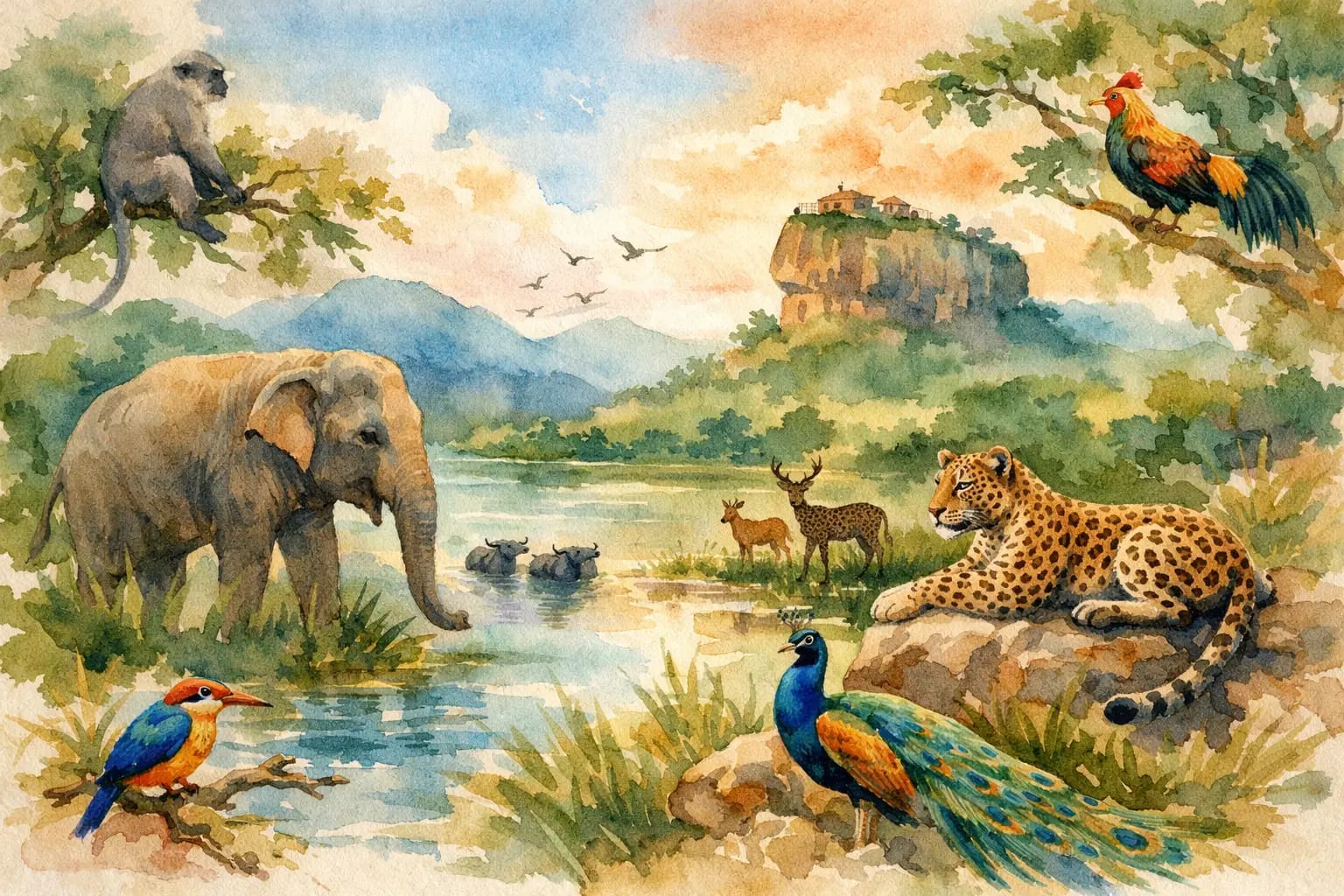
A leopard stepping quietly through tawny grass. A herd of elephants crossing an open plain at sunset. Blue whales surfacing beyond the continental shelf. The best Sri Lanka wildlife experiences are remarkable not simply because the island is rich in species, but because they can be woven into a beautifully varied holiday of tea country, ancient cities, restorative beaches and exceptional stays.
For a more considered journey, the question is not which single park is best. It is how to choose the right wildlife moments for your travel dates, pace and interests, while allowing enough time to enjoy them without rushing from one lodge to the next. Sri Lanka rewards thoughtful planning, particularly for guests who want nature to feel intimate rather than like a checklist.
The best Sri Lanka wildlife experiences, tailored to the season
Sri Lanka is compact, yet its weather patterns are wonderfully varied. The south-west and central regions are generally at their driest from December to March, while the east coast is especially appealing from around May to September. Wildlife can be enjoyed year-round, but the finest experience often depends on matching each region to the season.
A private chauffeur-guide and carefully chosen lodges make this far easier. Early safari starts, changing park conditions and long-holiday comfort all matter. A well-paced itinerary might pair the Cultural Triangle and its elephant country with the south coast, or combine the east with the ancient north-central plains and the forested highlands.
Leopards in Yala National Park
Yala remains Sri Lanka’s most celebrated leopard destination. Its dry-zone scrubland, rocky outcrops and waterholes create a dramatic setting for safari, and the concentration of leopards in Block I is among the finest in Asia. Sightings are never guaranteed, as they should not be, but an experienced naturalist can read tracks, alarm calls and the landscape with a patience that transforms the experience.
The trade-off is popularity. Yala can feel busy in peak periods, especially around well-known sightings. For travellers who place privacy and a gentler rhythm above the highest possible chance of seeing a leopard, a stay just outside the park with a sensitively timed safari is preferable to trying to cover too much in one day. An afternoon drive can be particularly beautiful, with softer light and the possibility of seeing elephants, sloth bears, crocodiles and colourful birdlife alongside the big cats.
Wilpattu for wilderness and quiet suspense
Wilpattu offers a distinctly different safari mood. It is Sri Lanka’s largest national park, its forest and open plains punctuated by natural lakes known as villus. Leopards live here too, but the pleasure lies as much in the unhurried search as in the sighting itself.
For couples, honeymooners and repeat safari guests, Wilpattu can be a compelling alternative to Yala. Game drives often feel more secluded, and the landscapes have a wilder, more atmospheric quality. It suits an itinerary that begins in Colombo or Negombo before moving north to the Cultural Triangle, allowing wildlife and heritage to sit naturally together.
Elephants at Udawalawe, Minneriya and Gal Oya
Few encounters stay with travellers like watching a matriarch guide her family across the grasslands. Udawalawe National Park is one of the most reliable places to see wild elephants, often in open country where viewing is excellent. It is a practical and rewarding choice between the hill country and the southern coast, particularly for families or first-time visitors.
Minneriya and neighbouring Kaudulla are exceptional in the dry months, when elephants gather around receding reservoirs. The famous Gathering is a natural spectacle of shifting herds, young calves and vast open skies. Exact movements vary with rainfall and water availability, so a flexible local plan is more valuable than a rigid promise of one specific park.
For something more immersive, Gal Oya offers a quieter east-side perspective. Here, a boat safari on Senanayake Samudraya may reveal elephants swimming between islands, along with deer, waterbirds and crocodiles. It is less about ticking off sightings and more about the rare privilege of observing wildlife in a spacious, tranquil landscape.
Whale watching that feels worth the early start
Sri Lanka is one of the few places where a beach stay can lead directly to some of the Indian Ocean’s greatest marine encounters. From Mirissa on the south coast, the season usually runs from November to April, with the chance of seeing blue whales, sperm whales and dolphins. Departures are early, and conditions can be choppy, so this is best chosen by guests comfortable on the water and prepared for a morning that can be longer than expected.
From Trincomalee on the east coast, whale watching is generally better from around May to September. The sea is often calmer in this period, making it an attractive option for families and those combining beach time with the Cultural Triangle. A responsible operator will keep a respectful distance, limit time near an animal and put the whales’ welfare before a close photograph.
The sighting itself is unforgettable, but the experience should also feel well cared for: a properly maintained boat, sensible passenger numbers, knowledgeable crew and no pressure to pursue wildlife. Luxury in nature is not about getting closer at any cost. It is about having the time, comfort and expert guidance to appreciate what appears.
Birdlife and rainforest for a slower kind of wonder
Sri Lanka’s wildlife is not confined to headline animals. The island is a superb destination for birdwatchers, photographers and travellers who find as much pleasure in a jewelled kingfisher or a leaf-tailed lizard as in a leopard.
Sinharaja Forest Reserve is a lush, humid world of towering trees, forest streams and endemic birdlife. A guided walk here is best approached with curiosity rather than urgency. Leeches, rain and uneven paths are part of the rainforest experience, but a good guide brings the forest into focus, pointing out the subtle movement and calls that are easy to miss.
The wetlands around Bundala, the lagoons of the south and the national parks of the dry zone add another dimension. Migratory birds arrive in considerable numbers during the northern winter, while resident species provide colour throughout the year. These quieter experiences create welcome contrast after a safari and are particularly rewarding when included in a longer, bespoke retreat.
How to make a Sri Lanka safari feel genuinely special
The difference between a good wildlife holiday and an exceptional one is often found in the details. Choose no more than two or three key wildlife areas on a typical two-week holiday. Trying to visit every park can turn a restorative escape into a series of early alarms and long drives.
Plan two safari drives where possible. One drive may bring wonderful sightings, but a second gives you time to slow down and lets nature set the pace. It also makes the experience more enjoyable if one outing is affected by heat, rain or vehicle traffic.
Accommodation matters too. A refined tented camp or boutique lodge near the park can turn a safari into a complete retreat, with a peaceful terrace, excellent dining and the comfort to rest between drives. For guests travelling as a family, interconnecting rooms or a private villa may be the better choice; for a honeymoon, an intimate lodge with a plunge pool and candlelit dinner can set a different tone entirely.
Above all, travel with respect for the animals and the communities who share their landscapes. Avoid feeding wildlife, insist on responsible viewing distances and accept that the finest sightings cannot be scripted. The most memorable moments are often unexpected: an elephant calf testing its trunk, a peacock calling from a tree, or a leopard vanishing back into the bush.
A considered route for wildlife lovers
A classic luxury wildlife itinerary might begin with two nights near Sigiriya, combining ancient citadels with an elephant safari in Minneriya or Kaudulla. Continue to the tea country for cooler air and serene scenery, then travel south for Udawalawe or Yala before finishing beside the ocean in Galle or along the coast.
Alternatively, a quieter route could combine Wilpattu, the Cultural Triangle and Trincomalee, with seasonal whale watching and time on the east coast. Both journeys balance adventure with breathing space, and both can be adjusted around private interests, accessibility needs and preferred accommodation styles.
At Lush Sri Lankan Holidays, a bespoke wildlife journey is designed around more than a park gate and a safari vehicle. It is shaped around the moments you want to remember, with the right guide, the right lodge and enough room in the itinerary for Sri Lanka to surprise you. Leave space for that surprise: the wildest sighting is often the one no itinerary could promise.