


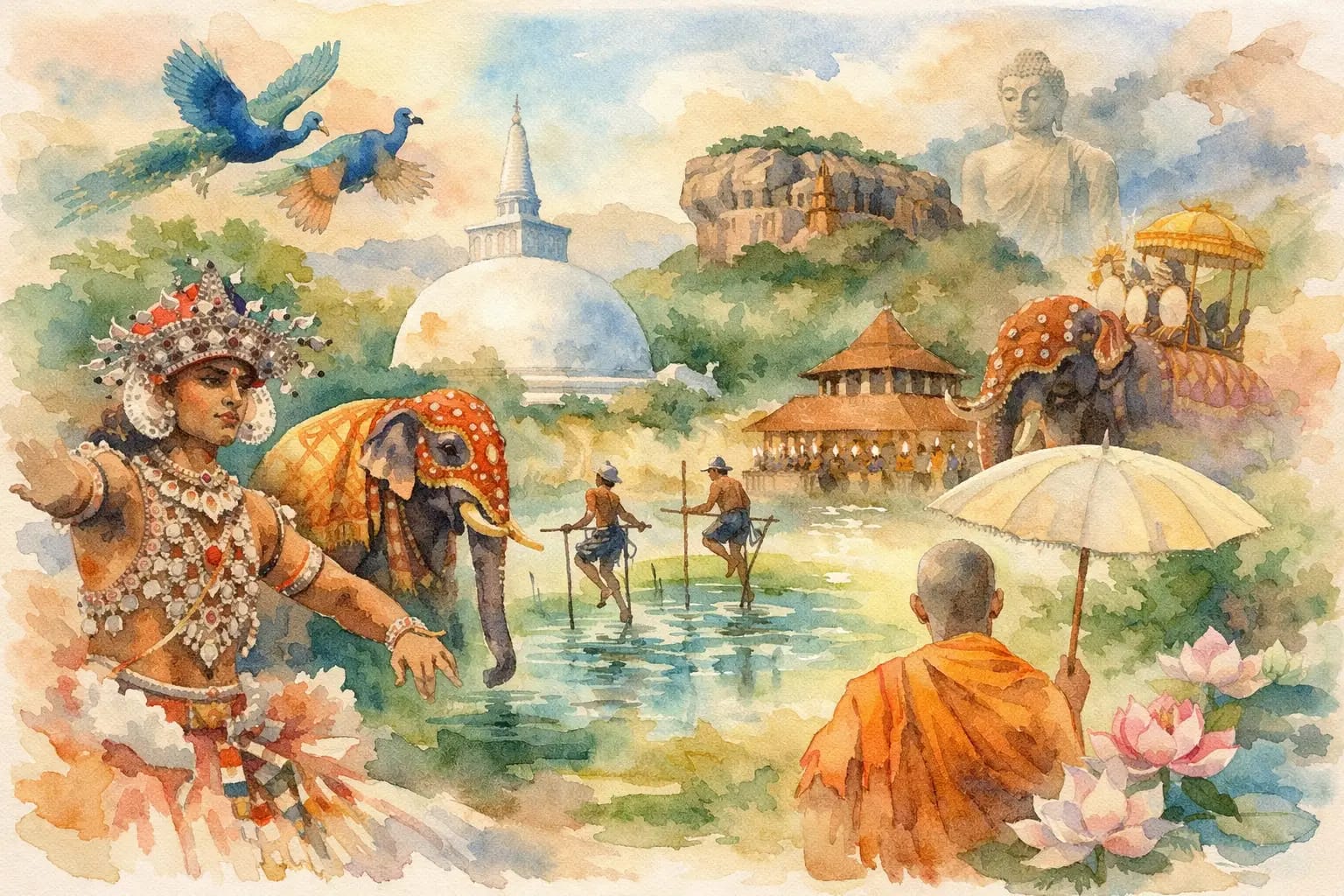
The sound arrives before the sight: drums gathering pace in Kandy as white-clad devotees carry lotus flowers towards the Temple of the Sacred Tooth Relic. Moments like this are why the best Sri Lanka cultural experiences are not simply stops on an itinerary. They are encounters that ask for time, sensitivity and the right setting.
Sri Lanka is compact enough to combine ancient capitals, tea country, colonial ports and living religious traditions within one beautifully paced holiday. Yet culture here should never feel like a checklist between pool time and safari drives. A considered journey allows room for a knowledgeable local guide, a graceful heritage stay and unhurried mornings when a place is at its most meaningful.
Best Sri Lanka cultural experiences, thoughtfully paced
1. Attend evening puja in Kandy
Kandy’s Temple of the Sacred Tooth Relic is among the island’s most significant Buddhist sites. The evening puja, when the temple’s inner sanctum opens briefly amid drumming and chanting, is an especially moving introduction to Sri Lankan faith and ceremony. It is not a performance, and that distinction matters.
Dress modestly, remove shoes where required and arrive with enough time to absorb the atmosphere rather than rushing in for the opening. A private guide can explain the customs, the temple’s history and where to stand respectfully. For many travellers, pairing this visit with a serene night in a refined Kandy hotel creates the right balance between cultural immersion and retreat.
2. See Kandyan dance in its proper context
The vivid costumes, silver breastplates and athletic spins of Kandyan dance are instantly recognisable, but the tradition has roots in ritual, storytelling and the royal court. A well-chosen performance makes those layers clearer, especially when it forms part of a wider stay in Kandy rather than a fleeting coach-tour stop.
The annual Esala Perahera, usually held in July or August, offers the grandest expression of this heritage: processions of dancers, drummers and decorated elephants move through the city over several nights. It is spectacular, but also crowded, high-demand and less restful than a typical luxury escape. Those travelling at this time benefit from early planning, carefully selected accommodation and realistic expectations around road closures.
3. Walk Sigiriya with an expert historian
Sigiriya rises dramatically from the central plains, but its appeal goes far beyond the famous ascent. This fifth-century rock fortress was a royal citadel, water garden and artistic statement, with frescoes that still hold their colour high on the rock face. The view from the summit is remarkable, yet the story beneath it is equally compelling.
An early start avoids the strongest heat and allows a quieter approach through the landscaped gardens. Travellers with limited mobility may prefer to admire Sigiriya from below and explore the surrounding cultural triangle instead, as the climb involves many steep steps. A guide who can bring the site’s politics, engineering and symbolism to life turns a striking photograph into a lasting memory.
4. Pause among the cave temples of Dambulla
Dambulla’s cave temple complex feels wonderfully hushed after the drama of Sigiriya. Inside a series of rock-cut shrines are hundreds of Buddha images and sweeping murals, accumulated and restored over centuries. The candlelit interiors have a sense of devotion that needs no embellishment.
Visit in the cooler part of the day and wear clothing that covers shoulders and knees. As with many sacred sites, shoes must be removed, so socks can be useful on warm stone paths. Dambulla works beautifully as part of a two- or three-night cultural triangle stay, leaving enough time for the experience to settle rather than treating it as a quick diversion.
5. Share a Sri Lankan table
A generous Sri Lankan meal is one of the most immediate ways to understand the island. Rice is accompanied by curries that may include jackfruit, beetroot, dhal, aubergine, coconut sambol and fresh fish, each bringing a different balance of heat, tang and texture. Eating with your fingers is traditional, though cutlery is readily available and no guest should feel obliged.
A market visit followed by a cooking session in a welcoming home or boutique kitchen adds a personal dimension. It is also a useful reminder that Sri Lankan food varies by region and community. The cinnamon-rich flavours of the south, the seafood traditions of the coast and the Tamil influences of the north each tell a different story. Let your host know your spice preference, but be open to trying dishes as they are meant to taste.
6. Spend a slow afternoon inside Galle Fort
Galle Fort is often described as colonial, but its character is more layered than that. Portuguese foundations, Dutch ramparts, British-era buildings, mosques, churches and long-established local homes sit within its coral-walled streets. At sunset, families stroll along the ramparts as the Indian Ocean catches the fading light.
The pleasure lies in wandering without an agenda, perhaps after a guided walk that provides historical context. Choose a heritage hotel within or close to the fort, and you can enjoy early mornings before day visitors arrive and balmy evenings after the lanes have quietened. Galle is polished in places, certainly, but it remains a lived-in town rather than a museum piece.
7. Understand tea country beyond the tea cup
The emerald slopes around Hatton, Haputale and Ella are among Sri Lanka’s most photogenic landscapes, yet tea country also holds a complex social history. British planters established many estates in the nineteenth century, while Tamil workers and their families built communities whose culture remains central to the region today.
A thoughtfully led estate visit can illuminate how leaves are grown, picked, withered and graded, while placing the industry in its human context. The experience is best paired with a stay in a characterful bungalow or elegant hill-country retreat, where misty mornings, garden walks and a proper cup of Ceylon tea bring a gentler rhythm to the itinerary. The famous train journey is scenic, though first-class comfort and windows can vary, so a private car may be preferable for travellers who value flexibility.
8. Meet Jaffna’s distinctive northern heritage
For travellers able to devote a little more time to the island, Jaffna offers a cultural perspective unlike anywhere else in Sri Lanka. Tamil Hindu traditions, the Jaffna Fort, vivid temple gopurams, palmyrah landscapes and an exceptional regional cuisine create a powerful sense of place.
This is not usually a destination to squeeze into a short first visit. It deserves at least two nights, measured travel days and a guide with genuine local knowledge. The reward is a more complete understanding of Sri Lanka’s many identities, along with experiences such as tasting Jaffna crab curry, visiting Nallur Kandaswamy Kovil respectfully and taking a boat towards the quieter islands offshore.
9. Choose crafts with provenance and purpose
The island’s handcraft traditions make meaningful mementoes when chosen carefully. In the central region, woodcarving and handloom weaving reveal patient skill; in the south, mask-making is tied to folk theatre and ritual; across the country, jewellers work with locally associated stones and intricate designs.
Rather than browsing indiscriminately, visit an established workshop where the process is visible and makers are fairly represented. This brings more value than a souvenir alone: it opens a conversation about materials, symbolism and techniques passed between generations. Your travel designer can incorporate a studio visit that feels personal and avoids the pressure of a compulsory shopping stop.
Let culture shape the rhythm of your holiday
The finest cultural journeys leave space for comfort as well as discovery: a restorative afternoon after temple steps, a private transfer instead of a hurried connection, and hotels chosen for their sense of place. Lush Sri Lankan Holidays can craft these experiences around your interests, whether that means architecture, food, faith, family history or simply the pleasure of seeing Sri Lanka with greater understanding.
Bring curiosity, dress respectfully and leave a little room in the plan for the unexpected invitation, conversation or ceremony. Often, that is where the island feels most unforgettable.